
Profile of persons in treatment for addiction problems – 2021 Proyecto Hombre Observatory Report
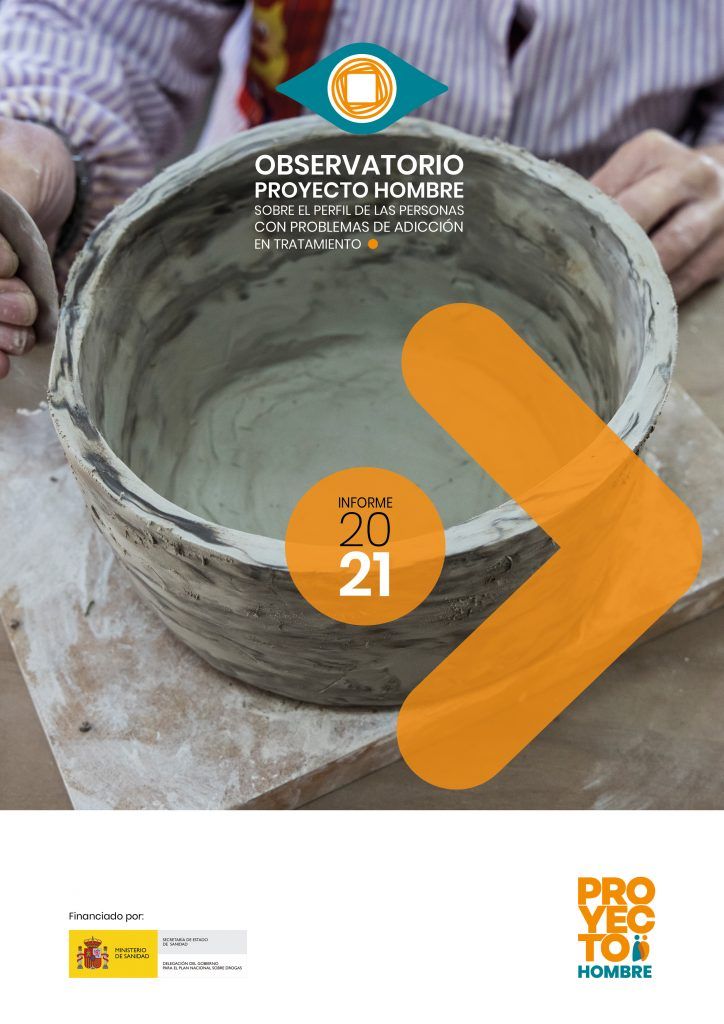
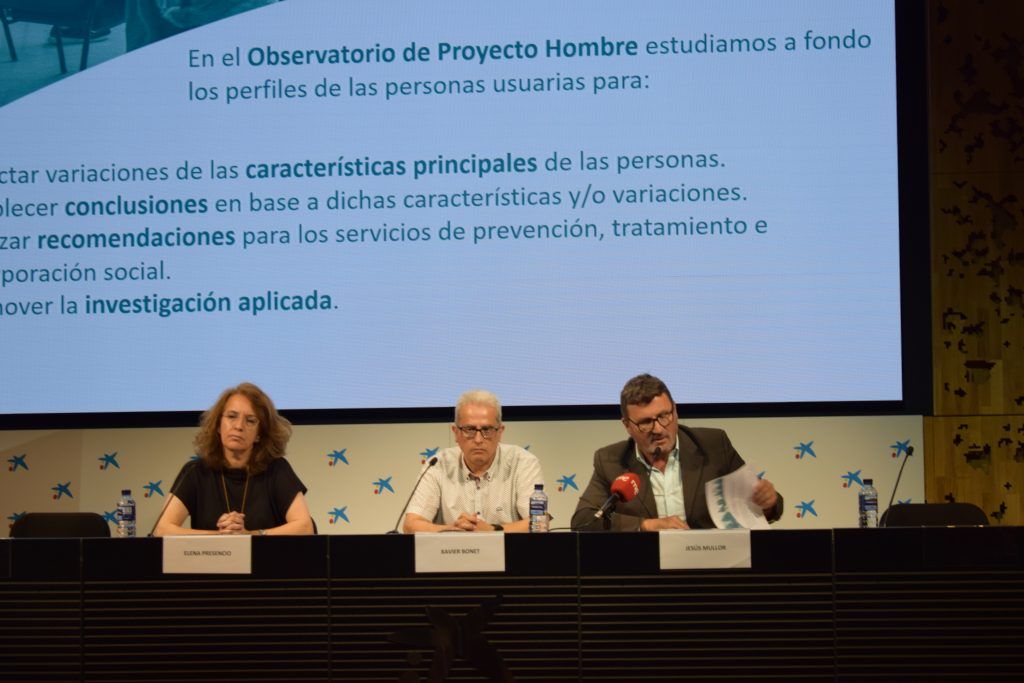
At a press conference last Tuesday, June 21st, Association Proyecto Hombre presented their 2021 Proyecto Hombre Observatory Report on the profile of persons in treatment for addiction problems, financed by the National Drug Plan. Relevant data was made public concerning the general and specific profile, by gender and substance of use, of the people treated in the past year, as well as trends since 2013.
The event was held at the CaixaForum, Madrid.
In the presentation, Proyecto Hombre reported upon the difficulties experienced by women with addictions in accessing help.
The main profile treated at Proyecto Hombre remains that of a 39-year-old man, employed and single; however, since 2012 the number of women in treatment has been steadily increasing.
According to the 2021 Proyecto Hombre Observatory Report, the percentage of women turning to the organization to treat their addiction stands at 18.19%. This is much lower than the percentage for men (81.9%), but higher than that of previous years.
This is an important figure. It does not imply an increase in consumption, but rather an increase in the number of women attending treatment. This is an achievement, since women take on average 2 years longer than men to seek help: they tend to have less family and social support, which makes treatment more difficult.
Being a woman with addiction means facing a double vulnerability and social disadvantage: on one hand, they have acted illegally, on the other hand they have failed to comply with traditional gender roles.
Proyecto Hombre addresses gender perspective in a transversal manner throughout its programs, through prevention and treatment based on the biopsychosocial model.
In 2021, the two substances accounting for the majority of treatment demand amongst the people surveyed at Proyecto Hombre remain cocaine, in first place, and alcohol in second. Together they comprise 72.9% of total admissions.
In the case of women the opposite is true, with alcohol being a more prominent issue than cocaine.
The aim of the Proyecto Hombre Observatory Report is to provide civil society, the media and public administration with information on the reality of addictions and on the people in treatment at Proyecto Hombre. In this tenth study (eleventh counting the multi-year study), we were able to trace consumption trends, as well as other trends representative of our population.
The presentation featured:
- Elena Presencio, general director of Association Proyecto Hombre.
- Jesús Mullor, director of the Proyecto Hombre Observatory.
- Xavier Bonet, expert sociologist at the Proyecto Hombre Evaluation Commission.
To view the complete report, also available in Spanish, click here.