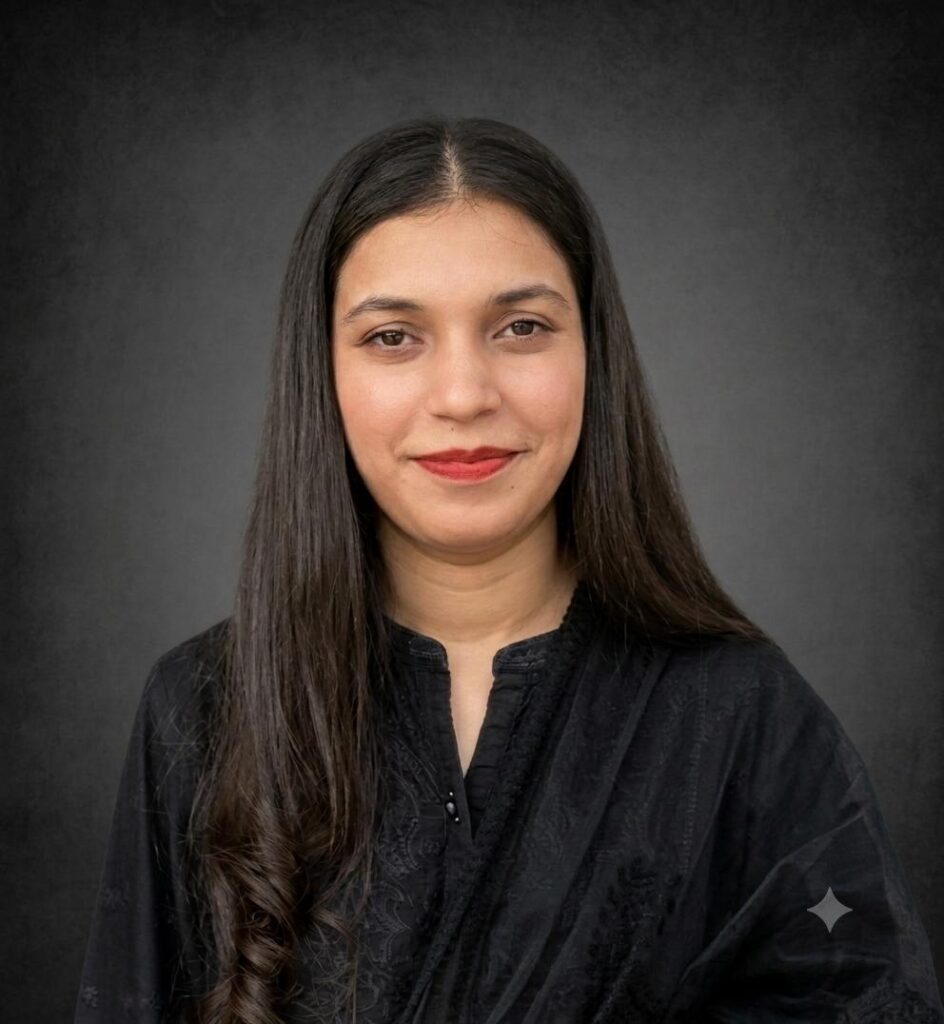
Fuhaira Sana, Youth Coordinator at the Pakistan Youth Organization: «Young people should also be actively involved in designing prevention strategies rather than being treated merely as recipients of awareness campaigns»
In the context of the ‘Barcelona Forum on Drugs,’ which will take place in January 2027, we spoke with Fuhaira Sana, Youth Coordinator at the Pakistan Youth Organization.
Question: As an expert in youth and addictions, what is the greatest challenge societies face today in reducing drug use and its consequences?
Answer: According to me there are a number of challenges societies are facing nowadays .The main drivers of addiction remains unaddressed like trauma, loneliness family conflicts, academic pressure and untreated mental health problems yet most of our prevention revolves around the substance not the main cause. Social stigma also creates problems for people if they want to ask for help. Fear of judgement,social exclusion or punishment discourage people for asking help. The digital media is changing so fast that the youth is exposed to the substance use more early than the prevention programs. Normalization of substance use on social media badly influences the youth.
Q. If you had to identify something we are not doing well enough in prevention, treatment or drug policy, what should we change?
A. We should start proactive, youth-centred prevention We often intervene only after substance use has become problematic, overlooking the social, emotional, and psychological factors that make youth vulnerable. Prevention should begin early, equipping young people with emotional resilience, life skills, critical thinking, and the confidence to seek help without fear of stigma or punishment. Schools, families, healthcare providers, and community organisations must work together to identify risks early and provide accessible, evidence-based support. Young people should also be actively involved in designing prevention strategies rather than being treated merely as recipients of awareness campaigns. Treatment and drug policies must complement prevention through compassionate care, harm reduction, and social reintegration. Our priority should be preventing vulnerability before it becomes addiction, rather than waiting to treat its consequence. Involving youth in such policies will help us understand the perspective of youth better.
Q. The ‘Barcelona Forum on Drugs’ brings together governments, researchers, professionals, civil society, young people and people with lived experience. What do we need to do to turn this collaboration into real change?
A. To turn collaboration into real change, we must move beyond dialogue and commit to shared action, measurable outcomes, and youth-led solutions. Governments, researchers, healthcare professionals, civil society, and people with lived experience should jointly develop practical strategies grounded in evidence and community realities. Young people must be treated as equal partners in decision-making, not merely as beneficiaries of prevention programmes. We need clear responsibilities, dedicated funding, timelines, and measurable indicators to ensure that commitments translate into accessible prevention, stigma-free treatment, harm reduction, and social reintegration. Sharing successful practices across countries while adapting them to local cultural and socioeconomic contexts is equally important. Most importantly, people with lived experience must have a meaningful voice in designing and evaluating policies. The Forum’s success should be measured not by the agreements reached in Barcelona, but by the lives improved and the sustainable changes implemented in communities worldwide.
The Forum’s success should be measured not by the agreements reached in Barcelona, but by the lives improved and the sustainable changes implemented in communities worldwide.
Q. Addiction is a global issue, but social and cultural realities differ greatly. What should be shared globally, and what needs to be adapted to each local context?
A. Addiction should be considered as a health issue/disease rather than a moral cultural or ethical failure ensuring complete care and treatment without any discrimination or stigmatization. Globally we should share evidence based treatment and preventive strategies , successful models for harm reduction and recovery
In countries like Pakistan basic awareness compaigns, family based support,youth involvement, culturally sensitive compaigns are extremely important. The goal should be that we should share common principles globally while allowing the local community to shape the solution accordingly depending upon their culture.International collaboration must promote learning, not impose one-size-fits-all approaches, ensuring that every intervention is accessible, acceptable, and effective within its context.
Q. What do you think the ‘Barcelona Forum on Drugs’ can contribute?
A. I see the Barcelona Drug Forum as a platform to connect my grassroots experience with international and global action. I believe drug prevention requires more than awareness; it requires trust, early intervention, and supportive environments where young people feel heard rather than judged. I want to explore how international approaches can be adapted to Pakistan’s local realities and how youth-led initiatives can make prevention more practical, inclusive, and sustainable.